
 Cannabis 101
Smoking vs. Vaping vs. Edibles: How Onset Time and Duration...
Published On 03-10-2026
Published by Dispensary.Click Research & Editorial Team
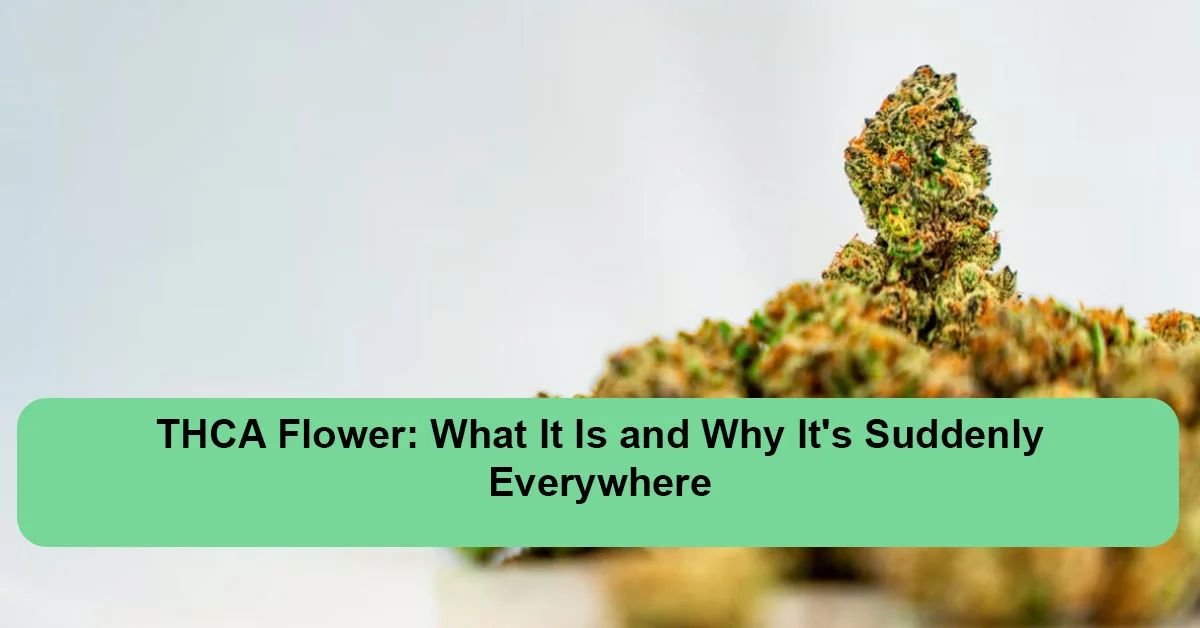
If you've shopped for cannabis flower recently, you've probably noticed the letters "THCA" showing up on labels more than they used to, sometimes as the headline number instead of THC. It's not a new strain category or a marketing rebrand. THCA has become the primary way flower potency gets measured and marketed, and understanding why requires a quick trip into cannabis chemistry that most consumers were never taught in the first place.
This shift matters beyond just label wording. THCA flower sits at the center of some real legal and practical distinctions that affect where you can buy it, how strong it actually is, and what happens when you smoke it. Here's what's actually going on.
Raw, unheated cannabis doesn't actually contain much THC. Instead, it's rich in THCA, tetrahydrocannabinolic acid, a non-intoxicating compound that's the direct precursor to THC. THCA only converts into active, intoxicating THC through a process called decarboxylation, which happens when the compound is exposed to heat, whether that's from smoking, vaping, or baking cannabis into an edible.
This means that living, freshly harvested cannabis flower is technically a THCA-dominant plant, not a THC-dominant one, right up until the moment it's lit or heated. Once you smoke it, that heat converts the vast majority of the THCA into THC almost instantly, which is why smoking THCA flower still gets you high even though the flower itself technically tests low in THC and high in THCA before combustion.
Federal hemp law defines legal hemp based on a Delta-9 THC threshold measured before decarboxylation, not on total potential THC after heating. That legal distinction created an opening: flower that tests low in Delta-9 THC but very high in THCA can, depending on how it's measured and under what state's rules, be sold through different channels than flower tested and labeled with total THC in mind.
This is exactly why THCA flower has become such a significant category. High-THCA flower can deliver an intoxicating effect essentially identical to traditional high-THC flower once it's smoked, since the conversion during combustion produces comparable amounts of active THC. The percentage printed on the package as "THCA" is a strong predictor of how potent the flower will feel once smoked, even though it isn't technically a measurement of pre-existing THC.
In most practical ways, no. THCA flower is still cannabis flower, grown, cured, and trimmed the same way as any other flower. The plant itself isn't fundamentally different, and in many cases, what's labeled "THCA flower" and what's labeled "THC flower" at a licensed dispensary come from very similar cultivation processes. The real differences tend to show up in three areas:
| Label Term | What It Means |
|---|---|
| THCA % | The percentage of THCA present before heating; largely converts to THC once smoked or vaporized. |
| Delta-9 THC % | The percentage of already-active THC present in the unheated flower, typically a small number even in potent flower. |
| Total THC % | A calculated figure estimating the THC content after full decarboxylation, factoring in the THCA-to-THC conversion rate. |
| Total Cannabinoids | The combined percentage of all cannabinoids present, including THCA, THC, CBD, and minor cannabinoids. |
If a product only lists a high THCA percentage with no total THC figure, it's reasonable to expect the flower will feel roughly as potent as a comparable percentage of traditional THC flower once smoked. The conversion from THCA to THC during combustion is fairly efficient, generally in the range of 80 to 90%, so a flower testing at 25% THCA will feel noticeably strong.
A few factors converged to push THCA flower into the mainstream. Some consumers in states without adult-use dispensaries have been able to access THCA flower through hemp-focused retail channels, expanding availability in places where traditional dispensary cannabis isn't sold. In states with regulated markets, cultivators found that emphasizing THCA percentage let them market genuinely high-potency flower using the actual chemistry involved, rather than relying on calculated total THC numbers that some consumers found confusing or inflated.
There's also a simpler explanation: high-THCA flower, properly grown and cured, is just strong flower, and strong flower sells. As breeding and cultivation techniques have improved, THCA percentages in premium flower have climbed considerably compared to what was typical even five years ago.
No. Standard drug tests screen for THC metabolites that your body produces after THC enters your system, not for THCA specifically. Since smoking THCA flower converts the compound into active THC, it will trigger a positive THC drug test just like any other cannabis flower would. There's no meaningful advantage to THCA flower if avoiding a drug test is a concern.
THCA flower isn't a separate category of cannabis so much as a different way of measuring and labeling the same plant. Once it's smoked, the experience is essentially indistinguishable from traditional high-THC flower testing at a comparable level. Understanding the THCA-to-THC conversion helps make sense of labels that might otherwise look confusing, and knowing your state's specific rules around where THCA flower is sold and regulated is the most important practical step before buying.
This article was reviewed by the Dispensary Click Editorial Team for accuracy, clarity, and relevance. Information may be sourced from publicly available cannabis resources, state regulatory agencies, and lab-testing references where applicable.
Last reviewed: August 2026
Cannabis 101
 Cannabis 101
 Cannabis 101
 Cannabis 101