
 Cannabis 101
Smoking vs. Vaping vs. Edibles: How Onset Time and Duration...
Published On 03-10-2026
Published by Dispensary.Click Research & Editorial Team
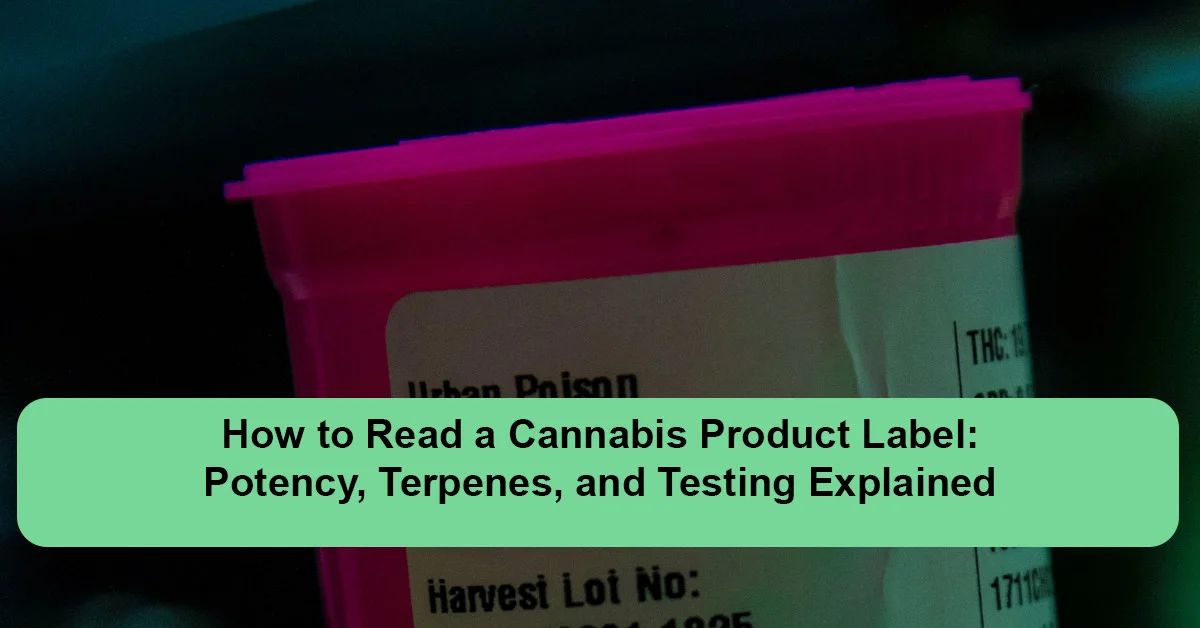
A cannabis label packs a lot into a small space: percentages, milligrams, abbreviations, batch numbers, warning symbols, and sometimes a QR code. For many shoppers, the only number that gets attention is THC. That is understandable, but it means missing much of what the label can tell you about strength, freshness, flavor, and safety.
This guide breaks down each part of a typical label, explains the terms that confuse people most, and shows you how to use lab reports to check what you are buying. It also covers something many guides skip: research has repeatedly found that potency numbers on labels are not always accurate.
Cannabis remains illegal under U.S. federal law, so there is no national cannabis label standard. Each state with a legal program writes its own packaging and testing rules. That means a label in Colorado may not look like one in Michigan or New York, and some states require details that others do not.
Most regulated labels include some combination of the following, though the exact requirements vary:
Raw cannabis flower contains very little THC. Instead, it contains THCA, an acidic form that is not intoxicating on its own. When cannabis is heated by smoking, vaping, or baking, THCA converts into THC through a process called decarboxylation.
Because of this, flower labels often list several numbers. The one that matters most for estimating strength is total THC, which combines the THC already present with the THC that THCA can produce. During conversion, THCA loses some of its mass, so labs use a standard formula:
Total THC = THC + (THCA × 0.877)
For example, flower with 0.5% THC and 25% THCA has a total THC of roughly 22.4%. If a label shows only a THCA figure, the total THC will be somewhat lower than that number.
Flower and concentrates usually show potency as a percentage of weight. Edibles, beverages, tinctures, and capsules usually show milligrams. Edible labels often list two figures: milligrams per serving and milligrams per package. A package marked 100 mg containing ten pieces delivers 10 mg per piece. Mixing up those numbers is one of the most common causes of accidental overconsumption.
Many states cap edible servings, frequently at 10 mg of THC, but limits and package rules vary. Always read the per-serving number before eating anything.
Concentrates such as vape oil, wax, shatter, and rosin often list THC at levels several times higher than flower. A small inhalation from a concentrate can deliver far more THC than a similar puff of flower, so beginners should treat these products with extra caution.
Lab testing is a major advantage of regulated cannabis, but studies show the potency printed on packages is often higher than what is actually inside, particularly for flower.
A 2023 study published in PLOS ONE purchased flower from Colorado dispensaries and found that about 70% of samples tested more than 15% below the THC percentage on the label. A larger 2025 study published in Scientific Reports, conducted by University of Colorado Boulder researchers with a licensed testing facility, found that only about 57% of flower products came within 15% of their labeled THC, while about 96% of concentrates did. On average, flower was labeled at 22.5% THC but tested closer to 20.8%. A 2026 study in PLOS ONE found a similar pattern of over-labeling across flower, edibles, and concentrates.
Researchers have suggested several reasons, including natural variation between buds in the same batch, changes during storage, and market pressure that rewards higher THC numbers. Whatever the cause, the practical lesson is simple: treat flower potency as an estimate, not a precise measurement.
Many labels now list terpenes, the aromatic compounds responsible for cannabis smell and flavor. You may see the top two or three terpenes by name, a percentage for each, or a total terpene figure.
Terpene data is useful for predicting aroma and flavor. A label led by limonene usually signals citrus notes, myrcene often suggests earthy or musky aromas, and caryophyllene tends to indicate pepper or spice. Research has also shown that terpene profiles describe a product's chemistry more reliably than indica, sativa, or hybrid labels.
What terpene data cannot do is reliably predict effects. Claims that specific terpenes make you sleepy or energized are mostly based on early or indirect research. Use terpenes to choose flavors you enjoy and to compare products, rather than as an effects guarantee.
The harvest date or package date is one of the most underrated parts of a flower label. Terpenes evaporate and degrade with time, heat, and light, and THC gradually breaks down as well. Fresher flower generally has stronger aroma and flavor.
The batch or lot number links your product to a specific production run and its lab results. If there is ever a recall or a problem with a product, this number is how it gets traced. Keep the packaging until you have finished the product.
A certificate of analysis, or COA, is the full lab report for a batch. Many products include a QR code linking to it, and dispensaries can often show it on request. Depending on state rules, a COA may include:
| COA Section | What It Shows | What to Look For |
|---|---|---|
| Cannabinoid potency | THC, THCA, CBD, and often minor cannabinoids | Total THC and CBD that match the package |
| Terpenes | Individual terpene percentages | Dominant terpenes and total terpene content |
| Pesticides | Screening for regulated pesticide residues | A pass result |
| Residual solvents | Leftover chemicals from extraction (concentrates) | A pass result |
| Heavy metals | Lead, arsenic, cadmium, mercury | A pass result |
| Microbials and mycotoxins | Mold, bacteria, and related toxins | A pass result |
| Batch details | Lot number, test date, lab name | A lot number that matches your package |
Two quick checks make a COA more meaningful. First, confirm the lot number on the report matches your package. Second, look at the test date; a report from long ago may not reflect how the product has aged.
If you are unsure about anything on a label, ask the budtender to walk you through it. Licensed dispensaries deal with these questions every day. You can also use Dispensary.click's dispensary listings to find licensed shops in your area before visiting.
Reading a label well takes about 30 seconds once you know what to look for. Check total THC or milligrams per serving to understand strength, glance at the terpenes for flavor, confirm the harvest or package date for freshness, and scan the QR code if you want the full lab report. Remember that potency numbers on flower are often generous, so let your own experience guide future purchases more than the highest percentage on the shelf.
This article was reviewed by the Dispensary Click Editorial Team for accuracy, clarity, and relevance. Information may be sourced from publicly available cannabis resources, state regulatory agencies, and lab-testing references where applicable.
Last reviewed: October 2026
Cannabis 101
 Cannabis 101
Cannabis 101
Cannabis 101
 Cannabis 101