
 Cannabis 101
Smoking vs. Vaping vs. Edibles: How Onset Time and Duration...
Published On 03-10-2026
Published by Dispensary.Click Research & Editorial Team
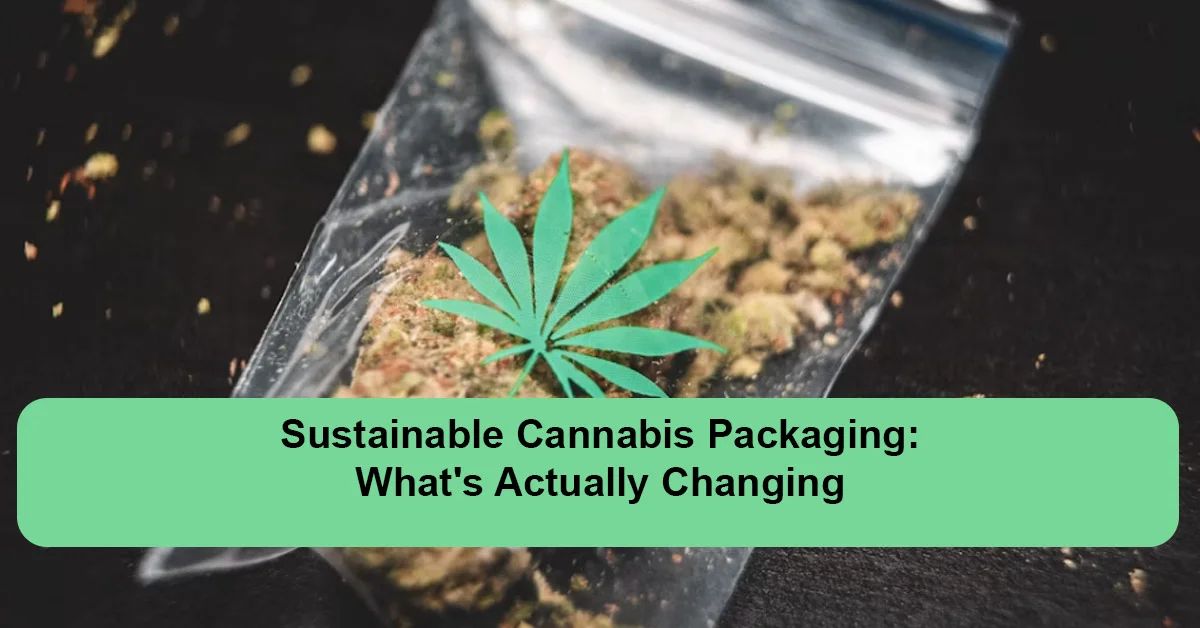
Anyone who's bought cannabis regularly has probably noticed the same thing: a small amount of product often comes wrapped in a surprising amount of packaging, oversized child-resistant containers, multiple layers of plastic, and boxes that feel disproportionate to what's actually inside. This isn't accidental excess, most of it stems from genuine regulatory requirements around child-resistant packaging and product labeling. But it's also created a real waste problem that the industry is only now starting to seriously address.
Legal cannabis packaging requirements exist for good reason, child-resistant closures, tamper-evident seals, and specific labeling requirements around potency, warnings, and testing information are all mandated by state cannabis regulators to protect consumers, particularly children. The problem is that these requirements were often layered onto packaging design without much consideration for environmental impact, resulting in containers that satisfy every regulatory box but generate far more waste than the product itself requires.
Add to this those the fact that cannabis remains federally illegal, which has historically limited access to established sustainable packaging supply chains that other consumer industries take for granted, and you get an industry that built its entire packaging infrastructure quickly, under regulatory pressure, without the benefit of the sustainability-focused supply chains available to more established consumer product categories.
| Packaging Type | Recyclability | Common Use |
|---|---|---|
| Mixed-material plastic containers | Often poor, difficult to recycle through standard programs | Flower jars, pre-roll tubes |
| Glass jars and bottles | Good, widely recyclable | Concentrates, tinctures, some flower |
| Recycled or recyclable paperboard | Good, if free of plastic laminate | Outer boxes, edibles packaging |
| Compostable plant-based plastics | Good, but requires industrial composting access | Some flower bags, emerging use in edibles |
Not every product labeled "eco-friendly" or "sustainable" delivers meaningfully on that claim, and this is worth approaching with the same skepticism you'd apply to sustainability marketing in any consumer industry. A few things worth checking before taking a sustainability claim at face value:
Sustainable packaging efforts have grown alongside, and often overlap with, the broader craft and small-batch cannabis movement discussed elsewhere on this site. Smaller cultivators and brands positioning themselves around transparency and quality often extend that same philosophy to packaging choices, favoring glass, recycled paperboard, and minimal design over the oversized, heavily branded plastic packaging more common among larger commercial operations built primarily around shelf visibility and brand recognition. This isn't a universal rule, some large operators have made genuine sustainability investments too, but the correlation is common enough that shoppers specifically prioritizing packaging waste often find smaller, craft-positioned brands a reasonable starting point.
Larger operators are catching up in places, several major multi-state brands have announced their own packaging redesigns aimed at reducing plastic use, suggesting the pressure to address packaging waste is starting to reach beyond the smaller, sustainability-focused segment of the market.
Cannabis packaging sustainability lags somewhat behind other consumer industries partly because of the same federal-versus-state legal patchwork that affects cannabis banking and taxation. Packaging suppliers serving the cannabis industry often can't operate at the same scale as suppliers serving fully legal, interstate industries, which limits economies of scale for sustainable material options and keeps costs higher than they might otherwise be. As state markets mature and potentially benefit from continued federal policy movement, expect sustainable packaging options to become more accessible and affordable across the industry.
Regulatory requirements themselves are also evolving in ways that could help. A small number of states have begun revisiting their child-resistant packaging rules specifically to allow for more sustainable material options that still meet safety standards, recognizing that the original requirements were often written without much consideration for the waste they'd eventually generate. As more states follow this pattern, packaging suppliers will likely have more incentive to develop sustainable options that satisfy safety requirements without the excess material that's characterized the category so far.
This article was reviewed by the Dispensary Click Editorial Team for accuracy, clarity, and relevance. Information may be sourced from publicly available cannabis resources, state regulatory agencies, and lab-testing references where applicable.
Last reviewed: September 2026
Cannabis 101
 Cannabis 101
 Cannabis 101
 Cannabis 101