
 Cannabis 101
Smoking vs. Vaping vs. Edibles: How Onset Time and Duration...
Published On 03-10-2026
Published by Dispensary.Click Research & Editorial Team
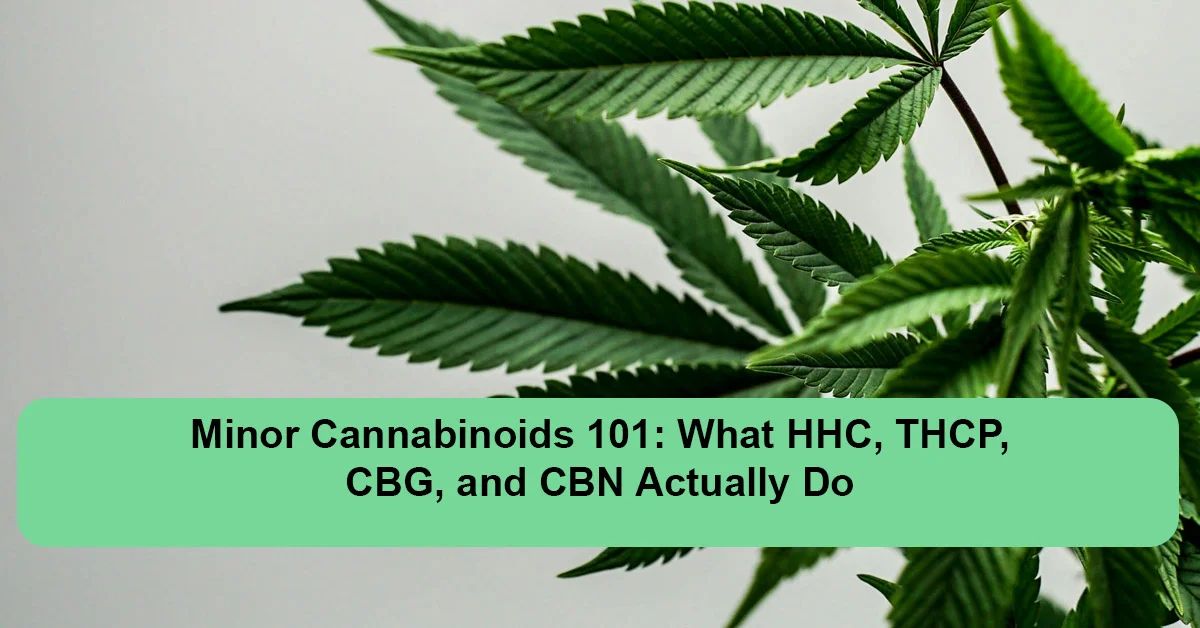
For most of cannabis's modern legal history, the conversation started and ended with two compounds: THC and CBD. That's changed quickly. Walk down a dispensary aisle now and you'll see product labels featuring HHC, THCP, CBG, CBN, and a handful of other acronyms that weren't part of the mainstream conversation even a few years ago. These are minor cannabinoids, compounds the cannabis plant produces in much smaller quantities than THC or CBD, and each one behaves differently once it reaches your body.
None of these are new discoveries exactly, cannabis has always contained dozens of cannabinoids in trace amounts. What's changed is the ability to isolate and concentrate them at scale, along with growing consumer interest in effects beyond the standard THC high or CBD calm. Here's a real breakdown of what each one is and why it's showing up on shelves now.
Cannabis plants naturally produce over 100 different cannabinoids, but THC and CBD dominate because they're present in the highest concentrations in most cultivated strains. Minor cannabinoids exist in much smaller amounts naturally, often less than 1% of a plant's total cannabinoid content, which historically made them impractical to extract and sell on their own.
Advances in extraction and, in some cases, conversion technology (transforming one cannabinoid into another through a chemical process) have made it commercially viable to isolate and concentrate these compounds. That's opened the door to products built around specific minor cannabinoids rather than treating them as an incidental part of a THC or CBD product.
HHC is a hydrogenated form of THC, meaning hydrogen atoms have been added to the THC molecule, similar to how vegetable oil is hydrogenated into margarine. This process makes HHC more chemically stable than THC and gives it a longer shelf life, since it's less prone to degrading into CBN over time the way THC naturally does.
Effects-wise, HHC is generally described as producing a milder version of a THC high, roughly 70 to 80% as potent by most user reports, though this varies by individual. Some consumers describe it as a smoother, slightly more clear-headed experience compared to traditional THC. HHC occurs naturally in cannabis only in trace amounts, so nearly all HHC products on the market are made through a conversion process starting with CBD extracted from hemp.
THCP is structurally similar to THC but has a longer carbon side chain, a molecular difference that appears to allow it to bind more strongly to the body's cannabinoid receptors. Early research suggests THCP may be significantly more potent than standard THC at the receptor level, though it's typically present in cannabis in extremely small, often undetectable natural quantities.
Because of that receptor-binding difference, THCP products are usually formulated at lower doses than standard THC products, and brands frequently blend it with THC or other cannabinoids rather than selling it in isolation. If you try a THCP product, starting with a noticeably smaller amount than you would with a comparable THC product is a reasonable precaution, given how new the compound is to the commercial market and how limited the consumer research still is.
CBG is sometimes called the "mother cannabinoid" because it's the chemical precursor that other cannabinoids, including THC and CBD, are synthesized from as the plant matures. Most cannabis strains contain very little CBG by the time they're harvested, since the plant has already converted most of it into other cannabinoids during growth, which is why CBG products typically rely on specially bred, early-harvested strains developed to preserve higher CBG content.
Unlike HHC and THCP, CBG is non-intoxicating, similar to CBD. It's most commonly marketed for its potential to support focus and general wellness, and it's frequently combined with CBD in tinctures, capsules, and topicals rather than sold as a standalone flower product, since CBG-dominant strains are harder to cultivate at scale.
CBN forms naturally as THC degrades over time through exposure to oxygen, light, and heat. Older cannabis flower that's been stored for a long time naturally develops higher CBN content as some of its THC breaks down, which is part of why aged flower is sometimes associated with a more sedating, mellow effect compared to fresher flower from the same strain.
Because of this natural association with aged cannabis, CBN has become heavily marketed around sleep and relaxation. It's mildly intoxicating on its own, much less potent than THC, and is frequently combined with THC, CBD, or terpenes like myrcene in sleep-focused product formulations rather than sold in a highly concentrated, standalone form.
| Cannabinoid | Intoxicating? | Commonly Marketed For | How It's Usually Produced |
|---|---|---|---|
| HHC | Yes, moderately | A smoother alternative to THC | Converted from hemp-derived CBD |
| THCP | Yes, potentially strongly | Enhanced potency, often blended with THC | Isolated in trace amounts or synthesized |
| CBG | No | Focus and general wellness | Extracted from early-harvest, CBG-bred strains |
| CBN | Mildly | Sleep and relaxation | Extracted or produced through THC degradation |
Minor cannabinoids appeal to a few different kinds of consumers at once: people looking for a milder alternative to standard THC, people specifically chasing stronger effects, and people who want a non-intoxicating option with a more targeted use case, like sleep or focus, than CBD alone typically offers. As cultivation and extraction technology continues to improve, expect this category to keep expanding rather than settling down anytime soon, since there are dozens more minor cannabinoids the plant produces that haven't been commercially developed yet.
This article was reviewed by the Dispensary Click Editorial Team for accuracy, clarity, and relevance. Information may be sourced from publicly available cannabis resources, state regulatory agencies, and lab-testing references where applicable.
Last reviewed: August 2026
Cannabis 101
 Cannabis 101
 Cannabis 101
 Cannabis 101