
 Cannabis 101
Smoking vs. Vaping vs. Edibles: How Onset Time and Duration...
Published On 03-10-2026
Published by Dispensary.Click Research & Editorial Team
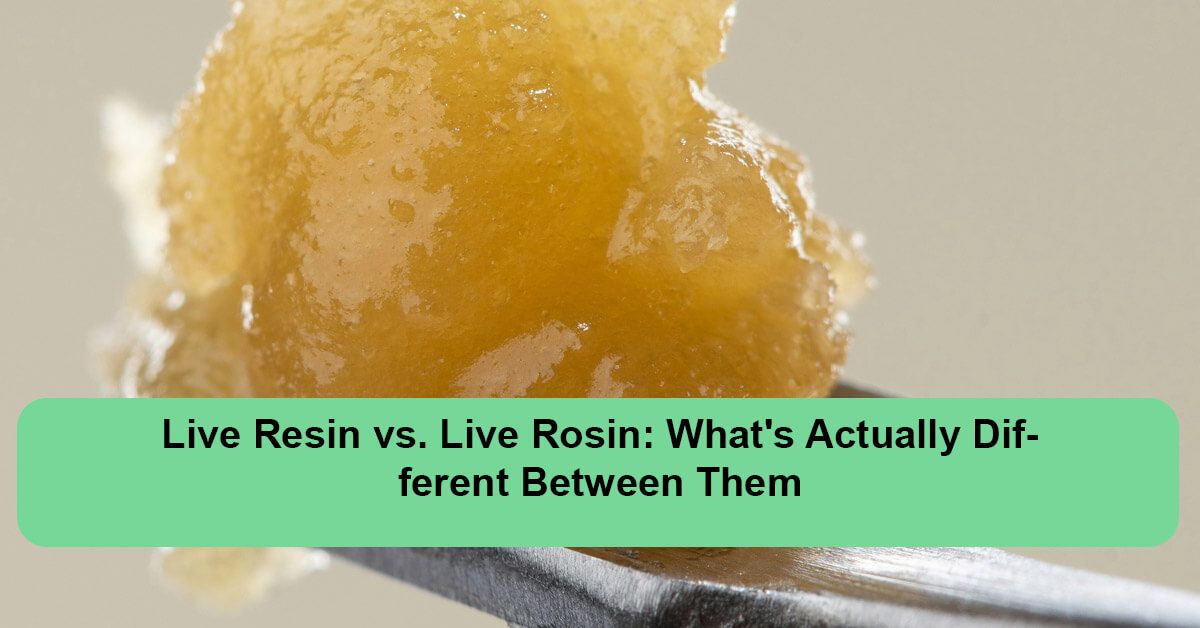
Stand in front of a concentrates case long enough and you'll eventually hit the same wall a lot of shoppers hit: live resin and live rosin sound almost identical, sit next to each other in the display, and both promise "fresh flavor," yet somehow cost different amounts and behave differently once you actually use them. The names being one letter apart doesn't help. Neither does the fact that both start with fresh-frozen cannabis rather than dried, cured flower.
The confusion is understandable, but the difference between the two comes down to one core question: was a solvent involved in extracting the cannabinoids and terpenes, or was it done with nothing but ice water, heat, and pressure? That single distinction shapes everything else about these two concentrates, from price to potency to how they're made in the first place.
Before getting into resin versus rosin, it helps to understand what the word "live" is doing in both names. Most cannabis concentrates start with flower that's been harvested, dried, and cured for days or weeks, a process that inevitably burns off a portion of the plant's original terpenes. Live resin and live rosin skip that step entirely. The plant is flash-frozen within hours of harvest, often right in the field, and stays frozen all the way through extraction.
That frozen state preserves terpenes that would otherwise degrade during drying and curing. It's the reason both live resin and live rosin tend to smell and taste noticeably closer to the living plant than concentrates made from cured flower. The "live" part of the name refers to this fresh-frozen starting material, not to any particular extraction method.
Live resin is made using a solvent, typically butane or propane, to strip cannabinoids and terpenes from the frozen plant material. The solvent dissolves the trichomes off the plant, and the resulting mixture goes through a purging process that removes the solvent, leaving behind a concentrate that can range from a sappy, loose consistency (sometimes called sauce or badder) to a firmer, more stable texture depending on how it's whipped or purged.
Because solvent extraction is efficient at pulling material off the plant, live resin often has a slightly higher yield per batch than rosin, which can make it more widely available and, in many markets, less expensive. The tradeoff is that the final product depends heavily on how thoroughly the solvent was purged. Reputable producers test every batch for residual solvents, and licensed dispensaries should be able to show you that lab data if you ask.
Live rosin skips chemical solvents entirely. Instead, the frozen plant material is first washed in ice water to separate the trichome heads (this step produces what's known as bubble hash), which is then pressed using heat and mechanical pressure to squeeze out the resinous oil. No butane, propane, or any other solvent ever touches the product.
This mechanical approach is more labor-intensive and typically yields less finished product per pound of starting material than solvent extraction does. Fewer trichomes survive the ice-water wash and pressing process cleanly, which is a big part of why live rosin usually costs more per gram than live resin. For a lot of consumers, that cost difference is the whole story, but the process itself is also why rosin has built such a strong reputation among concentrate purists: nothing is added or introduced during extraction, only heat and pressure applied to material the plant already produced.
| Factor | Live Resin | Live Rosin |
|---|---|---|
| Extraction method | Solvent-based (butane or propane) | Solventless (ice water, heat, and pressure) |
| Typical yield | Higher per batch | Lower per batch |
| Typical price | Lower to mid-range | Higher, often premium tier |
| Texture options | Sauce, badder, sugar, diamonds | Jam, batter, sauce (fewer stable options) |
| Flavor reputation | Strong, close to the plant | Often considered the purest and most terpene-forward |
| Residual solvent risk | Present unless properly purged and tested | None, since no solvent is used |
Neither concentrate is universally "better." Live resin gives you strong flavor and potency at a more accessible price point, and quality control has improved enormously across the industry, so residual solvent concerns are largely a non-issue with tested, licensed products. Live rosin appeals to people who want to know exactly what touched their concentrate during production and are willing to pay more for that certainty, along with what many consider a slightly cleaner, more nuanced flavor.
Packaging language can get murky, so it helps to know what to look for on the label:
Both concentrates work in a dab rig, an e-nail, or a concentrate-rated vaporizer, and many infused pre-rolls and vape cartridges now use live resin or live rosin as their base oil rather than standard distillate. Live resin's slightly firmer, more consistent textures (like badder or sugar) tend to be easier to handle with a dab tool for beginners. Live rosin's softer, sappier consistency can be trickier to work with at first but rewards low-temperature dabbing, since gentler heat brings out more of the terpene flavor that solventless extraction is known for preserving.
If you're new to concentrates in general, starting with a smaller amount than you'd use with flower is worth emphasizing here too. Both live resin and live rosin are considerably more potent by weight than flower, often testing well above 70% total cannabinoids, so a little goes further than it looks like it should.
If flavor and knowing exactly how your concentrate was made matter most to you, and price is a secondary concern, live rosin is generally considered the gold standard among solventless purists. If you want strong potency and excellent flavor without the premium price tag, live resin from a reputable, lab-tested brand delivers most of the same experience for meaningfully less money. Plenty of experienced concentrate users keep both on hand and reach for whichever one fits the moment, live resin for regular use, live rosin for when they want to slow down and actually taste what a specific cultivar brings to the table.
This article was reviewed by the Dispensary Click Editorial Team for accuracy, clarity, and relevance. Information may be sourced from publicly available cannabis resources, state regulatory agencies, and lab-testing references where applicable.
Last reviewed: August 2026
Cannabis 101
 Cannabis 101
 Cannabis 101
 Cannabis 101