
 Cannabis 101
Smoking vs. Vaping vs. Edibles: How Onset Time and Duration...
Published On 03-10-2026
Published by Dispensary.Click Research & Editorial Team
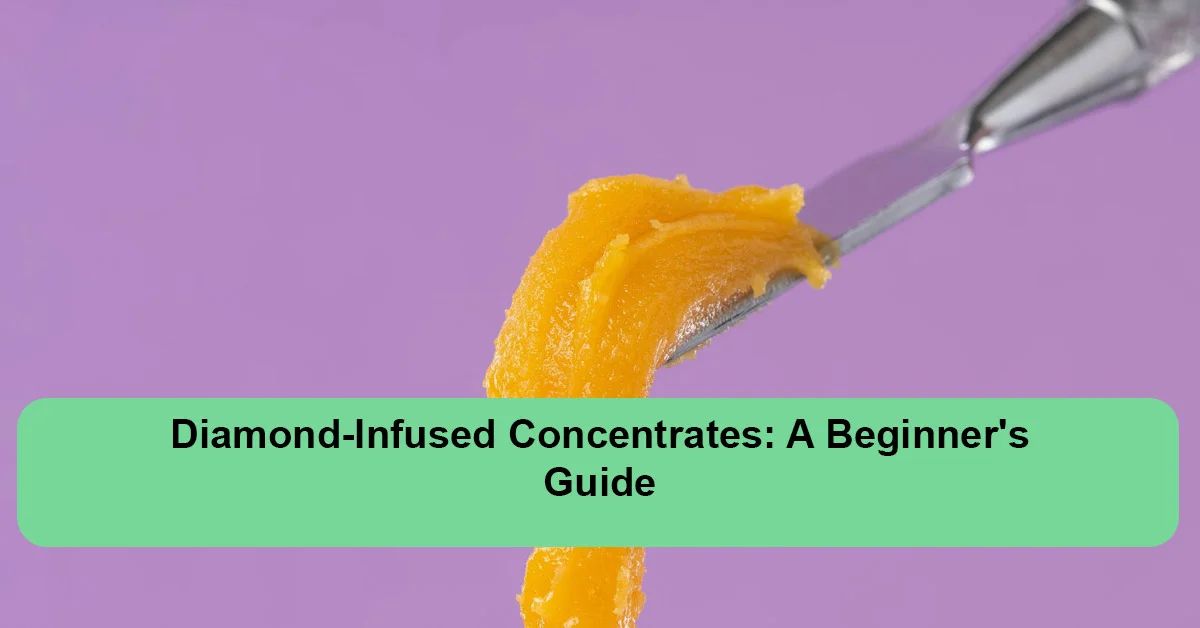
If you've browsed a concentrates case recently, you may have noticed small jars containing what looks almost like rock candy or crushed glass suspended in a syrupy liquid, labeled "diamonds" or "diamond sauce." These aren't a marketing gimmick or a flashy new flavor. They're one of the most potent, structurally distinct forms of cannabis concentrate available, and they've become popular enough that many pre-rolls, vape carts, and dab products now use them as a base ingredient.
If the name and appearance are throwing you off, that's fair, "diamonds" is genuinely descriptive. This guide covers what they actually are, how they're made, how they differ from other concentrates you may already be familiar with, and what a first-timer should know before trying them.
THCA diamonds are crystalline structures made almost entirely of pure THCA (tetrahydrocannabinolic acid), the non-intoxicating precursor to THC that's naturally present in raw cannabis. Under the right conditions, THCA molecules can arrange themselves into a crystal lattice, similar to how sugar or salt forms crystals, resulting in translucent, faceted structures that genuinely resemble small diamonds or rock candy.
Because they're composed of nearly pure THCA, diamonds can test extraordinarily high in potency, often in the 90 to 99% range for total cannabinoids once decarboxylated (heated to convert THCA into active THC). That makes them one of the most concentrated cannabis products on the market, well beyond what flower, live resin, or most vape cartridges typically contain.
You'll often see diamonds sold two different ways, and the difference matters:
Most consumer products you'll find at a dispensary are diamond sauce rather than pure diamonds, precisely because flavor matters to most buyers and pure crystals alone can taste fairly neutral or even slightly harsh.
The process is more involved and time-intensive than most other concentrate production methods, which is part of why diamond products tend to sit at the premium end of the price range.
This slow crystallization process is fundamentally different from how live resin or live rosin are made, and it's the reason diamonds have a distinct crystalline structure rather than the sappy or waxy texture typical of other concentrates.
| Factor | Diamonds / Diamond Sauce | Live Resin | Standard Wax or Shatter |
|---|---|---|---|
| Typical potency | 90 to 99%+ total cannabinoids | 60 to 80% total cannabinoids | 60 to 80% total cannabinoids |
| Production time | Weeks | Days | Hours to a few days |
| Texture | Crystalline, often suspended in liquid sauce | Sappy to firm, varies by purge method | Brittle (shatter) or opaque and pliable (wax) |
| Flavor (pure form) | Mild unless combined with sauce | Strong, close to the original plant | Moderate, depends on purging |
| Typical price tier | Premium | Mid to premium | Entry to mid |
Given how potent diamonds and diamond sauce are, they're generally not the best starting point if you're new to cannabis concentrates altogether. A dab-sized amount that would be completely normal for flower is enormous when it comes from a product testing near 99% cannabinoids. If you're new to concentrates in general, it's worth building experience with a lower-potency wax or a live resin product first, so you have a baseline for how your body responds to dabbing before working with something this strong.
If you do want to try diamonds as a first concentrate, a few practical steps make a big difference:
Diamonds aren't limited to dab rigs. They're increasingly used as an ingredient in other product categories:
Look for the actual cannabinoid breakdown on the certificate of analysis rather than relying on the word "diamonds" alone, since potency can still vary between products depending on how much sauce has been recombined with the crystals. A product labeled 99% THCA is close to the crystal form, while one labeled 70 to 85% has likely had more terpene sauce mixed back in, trading a bit of raw potency for stronger flavor.
This article was reviewed by the Dispensary Click Editorial Team for accuracy, clarity, and relevance. Information may be sourced from publicly available cannabis resources, state regulatory agencies, and lab-testing references where applicable.
Last reviewed: August 2026
Cannabis 101
 Cannabis 101
 Cannabis 101
 Cannabis 101