
 Cannabis 101
Smoking vs. Vaping vs. Edibles: How Onset Time and Duration...
Published On 03-10-2026
Published by Dispensary.Click Research & Editorial Team
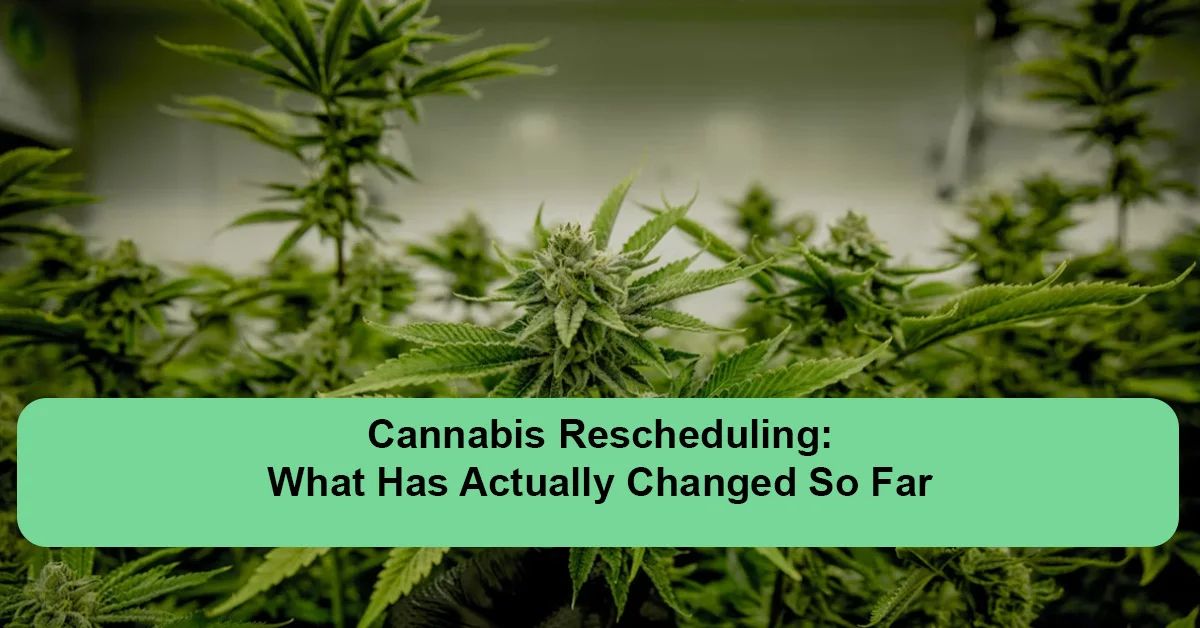
Federal cannabis rescheduling has been discussed as imminent for years, through multiple proposed rules, public comment periods, and postponed hearings that never quite reached a final decision. This year, the process finally moved in a real, tangible way, but the actual change is more limited and more complicated than a lot of headlines suggest. Here's a clear, accurate breakdown of what has genuinely happened, what hasn't, and what it means if you're not a lawyer or industry operator trying to track every procedural detail. For ongoing coverage of policy developments like this, see our news category.
The Controlled Substances Act organizes drugs into five schedules based on their accepted medical use and potential for abuse. Marijuana has been classified in Schedule I since the law's creation, the most restrictive category, reserved for substances considered to have no accepted medical use and a high potential for abuse, alongside drugs like heroin. Schedule III, by comparison, is for substances with accepted medical use and moderate potential for abuse or dependence, a category that includes drugs like ketamine and some anabolic steroids.
Moving marijuana to Schedule III wouldn't legalize it nationwide, state and federal cannabis law would remain separate systems, but it would meaningfully change how the federal government treats cannabis for research, taxation, and certain regulatory purposes.
In April, following a December executive order directing the Attorney General to expedite the rescheduling process, the Acting Attorney General issued a final order moving two specific categories of marijuana from Schedule I to Schedule III: marijuana contained in FDA-approved drug products, and marijuana subject to a state-issued medical marijuana license. This took effect in late April.
This is a narrower change than a full rescheduling of marijuana overall. Recreational marijuana, along with any cannabis not covered by a qualifying state medical license or FDA approval, remains in Schedule I. The order also didn't affect synthetically derived THC, which stays in Schedule I, and it left hemp's separate legal status under the Farm Bill entirely untouched.
Alongside the narrower order, the DEA set an expedited administrative hearing to consider whether marijuana should be rescheduled more completely, covering recreational marijuana and the broader cannabis market, not just the state-licensed medical and FDA-approved categories addressed in April. That hearing began in late June before an administrative law judge and concluded in mid-July.
As of this writing, no final decision has been issued on that broader question. The administrative law judge is expected to issue a recommendation based on the hearing record and post-hearing briefs, which then goes to the DEA Administrator, who holds final decision-making authority. In its own post-hearing brief, the DEA has argued in favor of moving marijuana to Schedule III, though a final ruling on the broader rescheduling question has not been issued.
| Category | Current Federal Schedule |
|---|---|
| FDA-approved drug products containing marijuana | Schedule III |
| Marijuana under a qualifying state medical license | Schedule III |
| Recreational or non-state-licensed marijuana | Schedule I |
| Synthetically derived THC | Schedule I |
| Hemp (as defined by the Farm Bill) | Not a controlled substance, separately regulated |
The most significant practical consequence tied to rescheduling is Section 280E of the federal tax code, a provision that prevents businesses trafficking in Schedule I or Schedule II controlled substances from deducting standard business expenses. This has forced cannabis businesses to pay effective tax rates far higher than typical retailers, since they largely can't deduct rent, marketing, and many other ordinary costs the way non-cannabis businesses do.
A full move of marijuana to Schedule III would remove cannabis businesses from Section 280E's restrictions entirely, since that provision only applies to Schedule I and II substances. The partial rescheduling that already took effect applies narrowly enough that its 280E impact is limited primarily to marijuana operating specifically under state medical licenses and FDA-approved products, not the broader recreational market that makes up the majority of the legal cannabis industry.
The April order rescheduling FDA-approved and state-licensed medical marijuana has faced legal challenges in federal court, with multiple parties disputing aspects of the order before the U.S. Court of Appeals for the D.C. Circuit. This means even the narrower rescheduling that has already taken effect isn't necessarily final and settled, it remains subject to ongoing litigation that could affect its future status.
It's worth noting how different this year's action is from prior rescheduling efforts. Health and Human Services first recommended moving marijuana to Schedule III back in 2023, and the DEA proposed a rule to that effect in 2024, but the process stalled repeatedly through postponed hearings and procedural delays that stretched across two years without a final decision. This year's action, a December executive order followed by an actual partial rescheduling order just months later, represents the first time the process has produced a concrete, legally effective change rather than another proposal or delayed hearing. That said, the broader question, whether marijuana overall gets moved to Schedule III, remains genuinely undecided, and the pattern of past delays is a reasonable basis for tempering expectations about how quickly a final decision might arrive.
It's also worth remembering that even this year's tangible progress came from executive branch action rather than new legislation from Congress, meaning a future administration could, in theory, revisit the direction of the policy. Nothing about the current trajectory should be treated as permanently locked in.
Because this is an actively moving legal and regulatory process, checking official sources directly, particularly the DEA's own regulatory actions page, is more reliable than relying on secondhand summaries or social media claims, which have a tendency to overstate how settled the situation actually is. Established cannabis policy and legal news outlets that specifically track DEA and DOJ filings are also a reasonable way to follow developments as they happen.
This article was reviewed by the Dispensary Click Editorial Team for accuracy, clarity, and relevance. Information may be sourced from publicly available cannabis resources, state regulatory agencies, and lab-testing references where applicable.
Last reviewed: September 2026
Cannabis 101
 Cannabis 101
 Cannabis 101
 Cannabis 101