
 Cannabis 101
Smoking vs. Vaping vs. Edibles: How Onset Time and Duration...
Published On 03-10-2026
Published by Dispensary.Click Research & Editorial Team
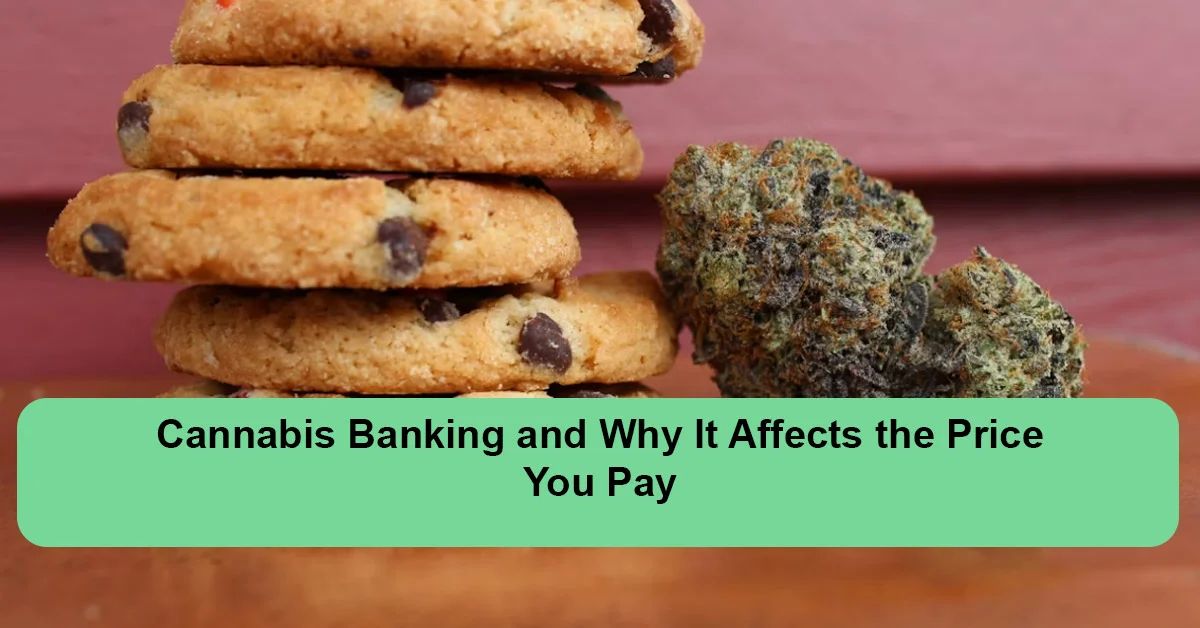
If you've ever wondered why a dispensary asks you to pay cash, charges an ATM fee that feels steep, or seems to run everything through a clunky cashless system instead of a normal card swipe, the answer traces back to a banking problem that has nothing to do with the specific dispensary and everything to do with federal law. Cannabis banking restrictions are one of the least visible but most consequential factors shaping what cannabis actually costs, and understanding the connection helps explain a lot about the industry's pricing that otherwise seems arbitrary. For more on the business side of cannabis, see our industry news category.
Even in states where cannabis is fully legal, marijuana remains a federally controlled substance. Banks are federally chartered or federally insured institutions, which means they answer to federal regulators regardless of state law. Handling money from a cannabis business, even a fully licensed, tax-paying one, exposes a bank to potential federal money laundering liability and regulatory risk, since federal law still treats marijuana proceeds as connected to a controlled substance.
Because of this, the overwhelming majority of banks simply decline to work with cannabis businesses at all, refusing to open accounts, process transactions, or extend credit. A small number of banks and credit unions have developed specialized, heavily compliance-monitored cannabis banking programs, but they charge substantially more for the added regulatory burden and risk they're taking on, and availability varies significantly by region.
Every one of these banking-related costs eventually gets factored into how a dispensary prices its products, the same way any business cost eventually reaches the consumer. A dispensary paying premium rates for cashless payment processing, absorbing the cost of physical cash security, and unable to access affordable credit to manage inventory efficiently is operating with meaningfully higher overhead than a comparable non-cannabis retailer, and that overhead shows up in shelf prices.
| Banking Restriction | Resulting Cost | Effect on Consumer Pricing |
|---|---|---|
| Limited access to bank accounts | Cash handling, security, and transport costs | Higher operating overhead built into prices |
| No access to affordable business credit | Higher-cost alternative financing or reduced inventory flexibility | Reduced ability to buy in bulk at lower cost, or higher financing costs passed through |
| Expensive cannabis-specific payment processing | Higher per-transaction fees than standard retail | Transaction costs factored into overall pricing |
| Federal tax code Section 280E | Cannabis businesses can't deduct standard business expenses | Effective tax rates far above typical retail businesses, reflected in pricing |
Banking access is only part of the financial burden cannabis businesses face. Section 280E of the federal tax code, originally written to prevent illegal drug traffickers from deducting business expenses, still applies to state-licensed cannabis businesses because marijuana remains a controlled substance federally. This means dispensaries generally can't deduct many standard business expenses, rent, marketing, most employee costs, that every other type of retail business takes for granted, resulting in effective tax rates dramatically higher than typical businesses face.
This connects directly to the ongoing federal rescheduling effort. A full move of marijuana to Schedule III would remove cannabis businesses from Section 280E's restrictions, since that tax provision specifically applies to Schedule I and Schedule II substances. As of this writing, only marijuana sold under a state medical license or in FDA-approved products has moved to Schedule III, leaving the broader recreational market, and the 280E burden facing most dispensaries, unresolved while a broader rescheduling hearing concluded in July without a final decision yet issued.
A handful of state-chartered banks and credit unions have built compliant cannabis banking programs over the years, providing some cannabis businesses access to basic banking services, though usually at a premium cost compared to standard business banking. Some states have also explored their own state-level banking solutions to work around federal restrictions, with mixed success given that federal banking regulation ultimately governs most financial infrastructure regardless of state effort.
The SAFE Banking Act, federal legislation designed specifically to protect banks that work with state-legal cannabis businesses from federal penalties, has been introduced repeatedly in Congress over multiple sessions without passing into law as of this writing. Its passage would meaningfully expand cannabis businesses' access to normal banking services, though it remains a separate legislative effort from the rescheduling process currently underway through the DEA.
Cannabis isn't the only industry that's dealt with banking friction, but the scale and duration of the problem is unusual. Businesses in other regulated categories, like firearms dealers or certain international money transfer services, have sometimes faced similar bank reluctance, often called "de-risking," but those situations are typically narrower and shorter-lived than what cannabis businesses have experienced across an entire industry for well over a decade. The scale of the cannabis banking gap, an entire multi-billion dollar legal industry largely locked out of standard financial infrastructure, is genuinely unusual, and it's part of why industry groups have pushed so persistently for a specific legislative fix rather than waiting for the situation to resolve informally over time.
This context matters for understanding why cannabis pricing sometimes seems disconnected from what a similar retail business would charge, the financial infrastructure most retailers take entirely for granted simply isn't available to cannabis at the same scale or cost.
Understanding the banking situation doesn't change what you pay today, but it does explain why cannabis prices sometimes seem disconnected from simple production costs, and why cash discounts or card-fee surcharges are common at dispensaries in a way they aren't at most other retail businesses. It also means that developments like potential SAFE Banking Act passage or further federal rescheduling progress are genuinely worth watching if you care about cannabis pricing trends, since either change would remove a substantial, currently baked-in cost driver across the entire industry.
This article was reviewed by the Dispensary Click Editorial Team for accuracy, clarity, and relevance. Information may be sourced from publicly available cannabis resources, state regulatory agencies, and lab-testing references where applicable.
Last reviewed: September 2026
Cannabis 101
 Cannabis 101
 Cannabis 101
 Cannabis 101